

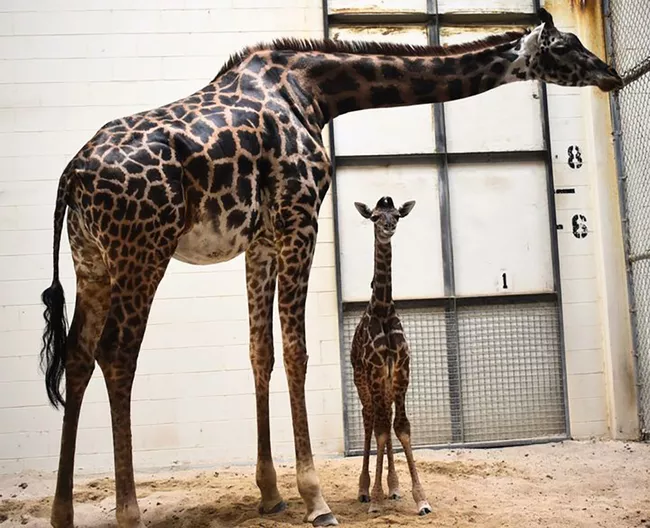
The Virginia Zoo’s new baby giraffe made an unforgettable entrance into the world.
According to a Sept. 19 release from the zoo, visitors to the park witnessed the miracle of life when Imara the Masai giraffe went into labor and gave birth in front of guests on the morning of Sept. 9.
The female calf, Imara’s ninth baby, weighed 122 pounds and stood 6 inches tall at birth. Masai giraffes can grow up to 18 feet tall, per the Virginia Zoo.
The facility also announced that the zoo named the baby giraffe Tisa and explained the name’s special meaning in a Facebook post.
“Keepers chose the serendipitous name, which means nine in Swahili, and represents her birthday (9/9) and the number of calves in which her mom, Imara, has given birth (9!),” the zoo shared.
Twenty-four hours after Tisa’s birth, the calf received a neonatal exam from zoo veterinarian Dr. Tara Reilly and a team of keepers and veterinary technicians.
The Virginia Zoo wrote in an official statement that Tisa “is healthy and full of personality! Mom and baby are bonding, and the calf is nursing well. She appears strong and is already learning to run!”
The giraffe herd at the Virginia Zoo now consists of five animals: Imara, Billy, Noelle, her calf Mchanga, and Tisa.
Masai giraffes are native to East Africa and are listed as an endangered species due to poaching and habitat loss, making the birth of Tisa even more meaningful to the Virginia Zoo.
Animal lovers who want to meet Tisa can win a chance to get face time with the calf by becoming “zoo parents” through a symbolic adoption program. The proceeds from the program help fund various zoo efforts, including the Virginia Zoo’s Conservation Fund. Those who join the adoption program have the chance to win a virtual behind-the-scenes giraffe tour which will include meeting Tisa.
 cuteanimalsdaily1