

Imagine being on the hunt daily for 20,000 calories.
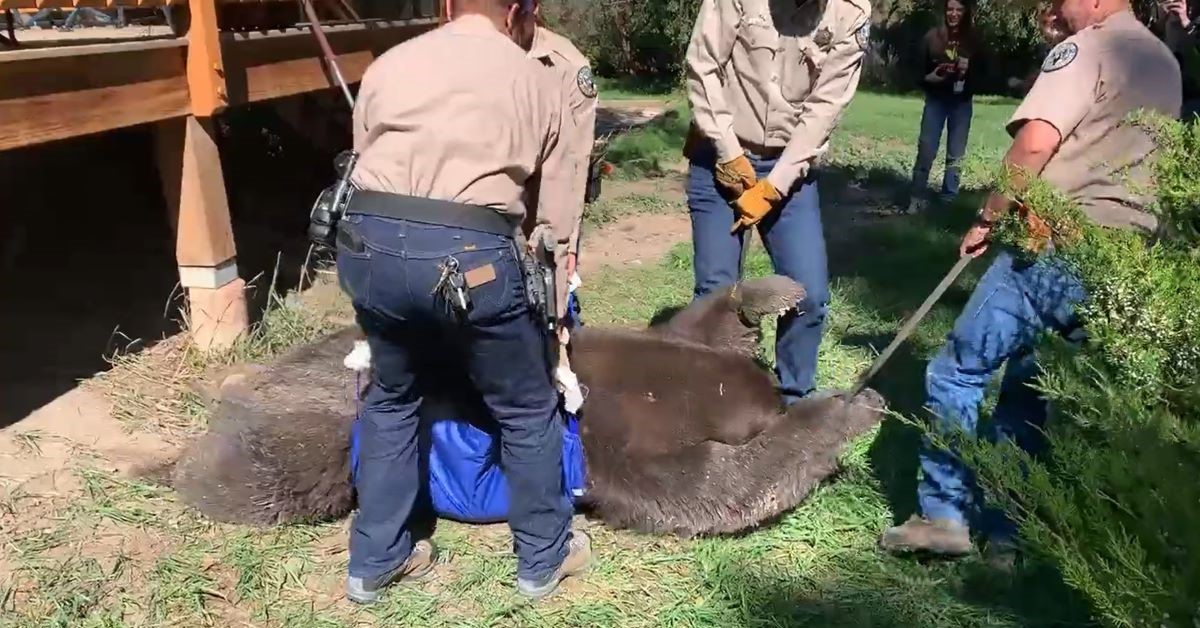
That’s the case with bears as they prepare for winter hibernation and it means, around this time of year, that a maximum amount of the creatures are roaming around residential areas searching for food. Some of the bears are also, as was the case with this Oct. 14 specimen, looking for a place to park it for the winter months.
“It took a tranquilizer dart and five members of Colorado Parks and Wildlife staff to get this bear out from under the deck and into a trailer so it could be prepared for relocation,” the agency wrote. “The bear underwent a quick health exam and was equipped with a microchip and ear tags.”
The black bear was also given a so-called reversal drug to counteract the effects of the tranquilizer. Agency officials said the animal quickly came to and was transported more than 60 miles from Durango. The relocation site has both good food sources and is a fair distance from favored human-hunter grounds.
The agency said they have received few calls overall for bears in Durango. They reminded on social media that residents should secure trash, remove bird feeders and pick up fallen fruit to avoid running into a big bear around the yard.
According to reports, the bear weighed around 400 pounds and was about 10 years old. Southwest Colorado Parks and Wildlife reported for that the period of April 1 through Oct. 1, 2022, there were 460 more reports of bears than the same period in 2021. In all, 3,614.
Over 90 percent of a bear’s natural diet is grasses, berries, fruits, nuts and plants. The rest is primarily insects and scavenged carcasses. With a nose that’s 100 times more sensitive than ours, a bear can smell food as far as five miles away.
 cuteanimalsdaily1