

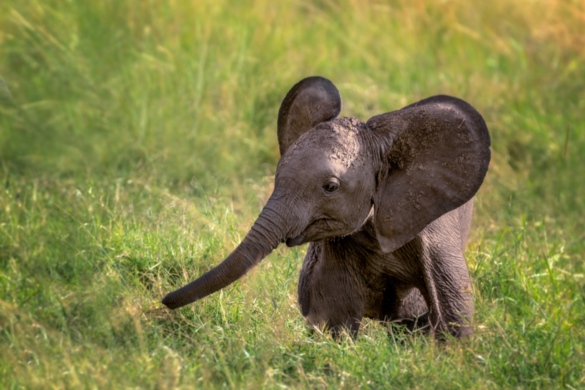
A baby elephant in South Africa’s Kruger National Park was caught on camera throwing a tantrum at tourists in their safari vehicles. On Friday, the footage was shared by Wildest Kruger Sightings that shows a young elephant gathering the courage to charge at a vehicle. Only the most confident adult elephants display this behavior, proving their courageousness.
The clip shows a calf frolicking. Suddenly, it decides to charge the safari vehicles but stops short of contact. Adult elephants step forward, obviously concerned for the curious calf. The website Wildest Kruger Sightings did not give credit to the videographer or specify when this filming occurred.
Kruger National Park is one of the largest game reserves in Africa, with nearly 5 million acres. It is located in northeastern South Africa. The administrative headquarters, or main base, is located in Skukuza. In 1898, sections of the park were first given legal protection by the South African Republic government. Then, in 1926 it became South Africa’s inaugural national park.
Elephants dominate Kruger National Park
Kruger National Park is home to all the big five game animals and has more species of large mammals than any other African game reserve (147 species). You can observe the wildlife via webcams set up around the park. In 1994, the park stopped culling elephants and instead tried to relocate them. However, by 2006, the elephant population had risen back up to approximately 13,500 – more than what the habitats can possibly sustain (which is thought to be only 8,000.)
Among the animals in the park, elephants have the largest impact on plant growth and density. Some species, like wildebeests, reap advantages from more grasslands. The park attempted to administer contraception to elephants starting in 1995 but ceased due to difficulty distributing contraceptives and disturbing herd members. Furthermore, the park has adopted a strict policy against poaching of any animal but rhinoceroses in particular. The Kruger National Park is home to packs of African wild dogs, which are an endangered species. It is estimated that there are only about 400 of these animals left in South Africa.
During the 1980s, Kruger experienced heavy elephant poaching. However, following a worldwide ban on ivory sales in 1989, the number of elephants being poached decreased significantly. Yet in 2014 there was a sudden rise again in the number of elephants being poached each year. This is continuing to grow at an alarming rate.
At the latest meeting of the Convention on International Trade in Endangered Species of Wild Fauna and Flora (CITES), delegates voted against proposals for more sales of ivory from government stockpiles. These one-off sales have been linked to increases in poaching across Africa, where elephant numbers have fallen by 30% between 2007 and 2014.
WATCH VIDEO BELOW:
 cuteanimalsdaily1