

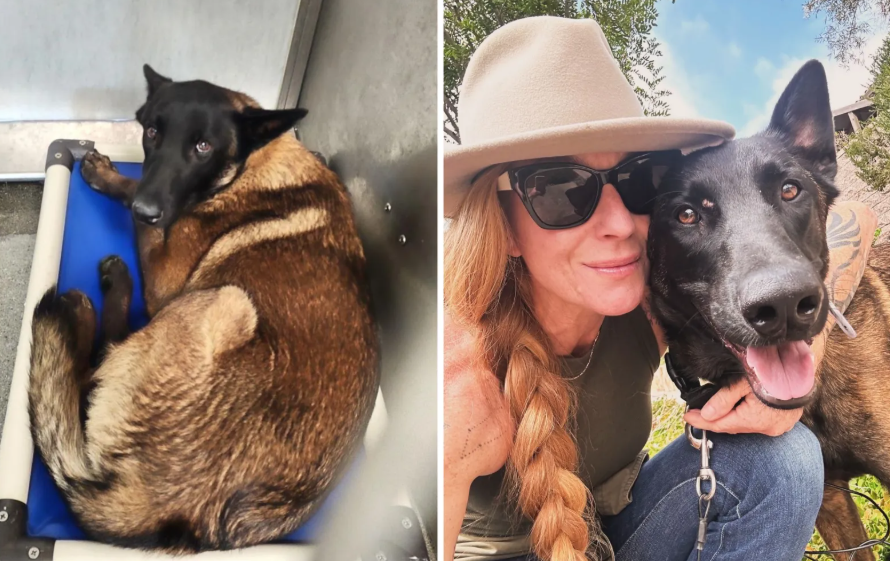
A dog once labeled “not adoptable” and facing euthanasia is now living a full, joyful life thanks to one woman who refused to give up on him.
Rebecca Kuritz, a 47-year-old photographer from San Diego, went viral in December after sharing the story of her dog, Zev, on her Threads account, @rebeccakuritz. Thousands of animal lovers followed along as she revealed how close he came to losing his life — and how dramatically everything changed once he was given a chance.
“He is the complete dog package,” Kuritz told Newsweek. “I call him the best boyfriend I have ever had, because he is loyal, attentive, fun, and a constant source of love.”
She added that the weight of what almost happened still hits hard. “Every joyful day, every adventure we’ve had with him would never have existed if he had been euthanized. When I think about how close he was to death, it breaks my heart.”
Zev, a Malinois, first caught Kuritz’s attention when she saw his photo online. But there was a problem: he wasn’t available for adoption.
“He wasn’t made available to the public, so I couldn’t even meet him,” she explained. After digging deeper, she discovered why. Zev had been in medical isolation for more than 60 days due to severe kennel cough and an upper respiratory infection. Labeled “not adoptable,” he was scheduled for euthanasia.
Kuritz, already familiar with the overcrowding crisis in Los Angeles shelters and the alarming rate at which even adoptable dogs are put down, felt she couldn’t look away. By 2023, she had already fostered six dogs — many of them Malinois or shepherds who were injured, sick, or deemed “difficult.”
By January 2024, her home was overflowing. She had her own dogs, multiple fosters with special needs, children, and a household already stretched thin. “I truly was not prepared to take on one more dog,” she admitted.
Then she saw Zev’s name on a list of dogs at immediate risk.
His notes said he was unadoptable not only because he was sick, but because kennel stress had caused him to completely shut down. He wouldn’t interact with shelter staff. His photo showed fear, confusion, and heartbreak. No one had met him. No one had chosen him. Time had run out.
Kuritz was struck by how much Zev resembled two of her current foster Malinois. Later, she learned they were likely from the same dumped litter — possibly discarded once they were too old for backyard breeders to sell.
Working with advocacy group Stacy’s Hope Rescue, Kuritz agreed to sign a medical liability waiver and immediately treat Zev’s illness. She was approved to adopt him without ever meeting him in person.
The first moment they met, she knew.
“He was incredibly thin, but visibly joyful,” she recalled. “He bounced toward my van with a loose, happy body and a wagging tail. He was coughing and sick, but everything about him felt hopeful. Alive.”
Zev weighed just 40 pounds when he came home. While he settled in quickly, it soon became clear he had a lot of trauma. He was completely untrained, terrified of brooms, loud noises, sudden movements, and being alone. He startled easily and struggled with severe separation anxiety.
But he was also deeply loving and eager to connect.
“He soaked up attention and learned quickly,” Kuritz said. Over time, his anxiety slowly began to ease.
Initially, Kuritz never planned to keep Zev permanently. She wanted to continue fostering dogs in crisis and believed he deserved a family of his own. When a seemingly perfect, experienced family came forward, she agreed to try.
It didn’t work out.
The family ignored her rules, and Zev escaped their yard. He was picked up by animal control and returned to her. A second potential adopter seemed promising, but once again ignored decompression guidelines. Zev escaped again after being taken to a worksite.
Then something unexpected happened. A stranger stopped Kuritz on the street, unaware of Zev’s story, and told her they were meant to be together and that she shouldn’t give up on him.
She took it as a sign.
“I broke my foster rule,” she said. “He was staying forever.”
Instead of focusing on strict obedience, Kuritz prioritized bonding and trust. Over time, Zev transformed. Nine months later, he had gone from “unadoptable” to what she lovingly calls “the bestest boy.”
Though never aggressive, Zev had learned to protect himself. He was especially reactive in Kuritz’s van, barking to warn people away. Later, she discovered he had once lived in a car with his siblings, which explained his protectiveness.
That instinct has since become a source of comfort.
“He has protected me on multiple occasions,” she shared, especially during solo road trips where she was approached aggressively.
Zev is remarkably intelligent — capable of opening doors, windows, and even crate locks — yet he chooses to stay close to home. He now accompanies Kuritz to photography events, including loud, crowded festivals, and handles them with confidence.
SEE ORIGINAL POST BY CLICKING HERE!
Kuritz continues fostering dogs deemed “unadoptable,” juggling work, parenting as a single mom, and rescue efforts to keep as many animals as possible off euthanasia lists.
According to LA Animal Services, shelters are overwhelmed, and even healthy, adoptable pets remain at risk due to lack of space. The agency has warned that overcrowding leads to safety concerns and humane issues, pushing shelters beyond their intended capacity.
For Kuritz, the mission is personal.
“My kids and I look at the lives that are thriving because we said yes,” she said. “We keep in touch with nearly every dog we’ve fostered or adopted. The reward is huge. Just look at Zev.”