

For the past six years, Sarah Carolyn has become the person everyone in Rochester, New York, calls when a stray cat desperately needs help.
The former nurse has devoted much of her life to rescuing animals, particularly cats with serious medical conditions and disabilities that make them difficult to place in traditional homes.
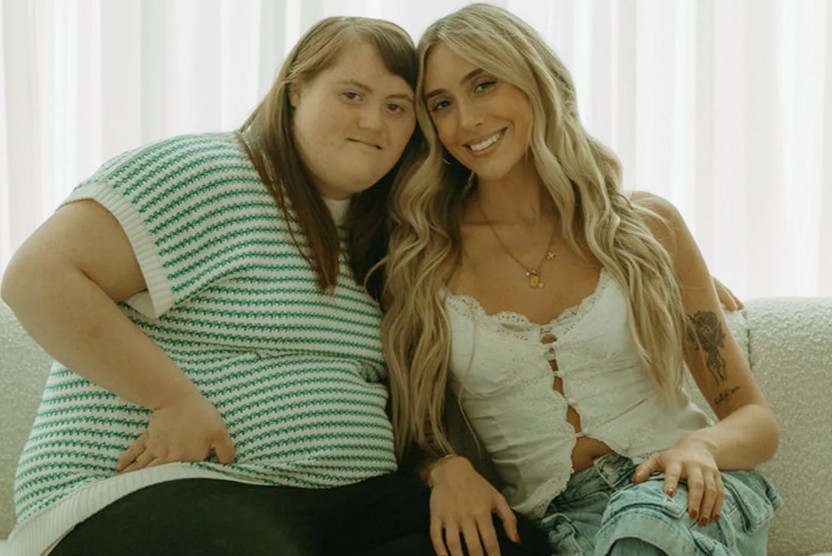
Sarah also serves as the legal guardian of her sister, Emily, who has Down syndrome. The sisters live together, create online content full time and share the responsibility of caring for their growing family of rescue cats.
Sarah first became involved in animal rescue in 2020.
“It started with cats and dogs, and then the rescue that I ended up spending years with transitioned to cats only because the need here is so great for cats,” Sarah explained. “We have a feral cat problem.”
Because of her nursing background, Sarah was able to take on animals with severe medical needs. She learned how to administer fluids, IV treatments, steroid injections and other forms of specialized care.
“Anything you can think of, I was able to do,” she said.
When Sarah and Emily moved into their current home about a year and a half ago, Sarah already knew she wanted to create a permanent sanctuary for cats that might otherwise have nowhere to go.
The sisters currently share their home with nine rescue cats. Many are blind, deaf, paralyzed or unable to use the bathroom without assistance.
Some of the cats wear diapers that Sarah changes several times a day.
“They’re all the ones that were either pulled from a euthanasia list, or they’re the ones that an average person would not be able to take care of,” she explained.
Sarah believed she and Emily could give those animals the safe and comfortable lives they deserved.
“That is what inspired me to make the sanctuary,” she said. “I knew that they deserved a space and a place to call home as much as a normal cat would.”
Sarah decided to transform the home’s massive 2,000-square-foot basement into a specially designed cat sanctuary.
The renovation took about four months, with Sarah completing much of the work herself. She installed flooring, painted the walls, added light fixtures and even sprayed the ceiling.
“I was DIYing everything,” she said. “It was a hefty project.”
Her goal was to make the space functional, inclusive and safe for every disabled animal that might enter the home.
Sarah hired a contractor to install the drywall and build closets, but she handled many of the other details herself because she understood the cats’ unique needs better than anyone.
WATCH THE VIDEO BELOW:
The process was far from easy.
Sarah described the renovation as incredibly stressful and estimated she probably had “a hundred meltdowns” while trying to complete it.
“I knew that the way that I wanted things done was to make it functional for the cats, because I know them the best,” she recalled. “I was like, ‘I’m gonna have to learn how to figure out how to make all this happen.’”
Now that the sanctuary is complete, Sarah feels proud every time she walks into the finished space.
“It’s really cool now to look back and be like, ‘I did this,’” she said. “I gave my amazing animals this beautiful living space, and I did that.”
One of Sarah’s favorite parts of the sanctuary is the cats’ dedicated bathroom area.
Instead of regular litter boxes, the room includes eight automatic litter robots. Each one has its own small mat and cat-themed carpet.
“It looks funny, like it’s from outer space,” Sarah joked. “But it’s so cute.”
The basement also includes a large sectional sofa where the cats can lounge together.
Sarah installed steps on the cat trees so animals with mobility issues can safely climb them. There are five cat trees throughout the room, although the cats appear to have a clear favorite — the one positioned beside a window where they can watch the world outside.
The full project cost Sarah close to $17,000.
The drywall alone reportedly cost about $8,000. Flooring, paint and other improvements added thousands more. Sarah said the paint cost at least $2,500.
She also built a custom feeding station where she can prepare meals for all nine cats before serving them.
“Trying to feed nine cats, you need to go into a separate space to prepare the food and then feed,” she explained.
All those additions quickly added up.
“It broke the bank,” Sarah admitted. “That was my big expenditure of the year.”
Despite the hefty price tag, Sarah is not finished improving the cats’ home.
Last year, she spent another $4,000 building an enclosed outdoor patio where the cats can safely enjoy fresh air.
They can reach the patio through a window connected to the house. During the winter, Sarah covers the area with plexiglass so the cats can continue using it during the colder months.
Her next goal is to build a tunnel connecting the basement sanctuary directly to the outdoor patio.
“It’s possible,” she said. “I’m gonna have to dig up my deck. We’ll figure it out.”
Emily also plays an important role in caring for the animals.
Sarah described her sister as “phenomenal” with the cats. Emily helps feed them, bathes them and makes sure one cat named Melly is wearing his diaper.
Caring for the animals has also given Emily a strong sense of purpose, which has inspired Sarah’s next major idea.
Within the next two years, Sarah hopes to purchase a large piece of property and open a separate animal sanctuary.
She wants the facility to employ only people with disabilities — and she wants Emily to help run it.
“She is so incredible with these cats and with these animals,” Sarah said. “How cool would it be to create a workforce, a workplace that people with disabilities can do?”
Sarah believes adults with disabilities have far too few meaningful employment opportunities in upstate New York.
“We have nothing for the adults to actually do besides being set up in a group home or put in front of a TV,” she said.
Her vision is to create a sanctuary where vulnerable animals receive loving care while adults with disabilities gain employment, responsibility and a supportive community.
“One thing about raising Emily is that you learn a lot about the lack of support people with disabilities have,” Sarah said. “How are there such limited programs for these adults? Someone needs to make some more.”
For Sarah, that “someone” may soon be her.